
Introduction
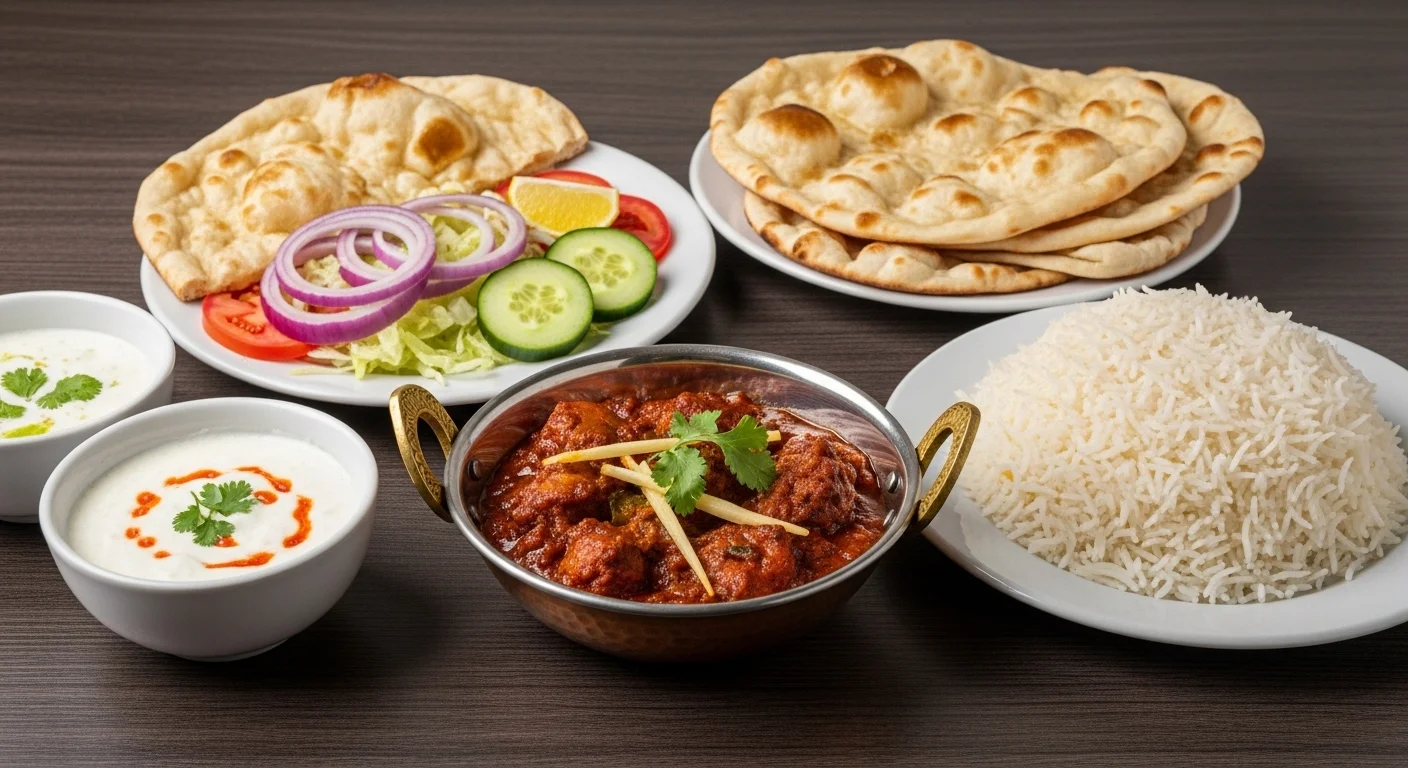
The sound of sizzling chicken, fresh tomatoes and green chilies in a wok is music to the ears. If you’ve ever been to a Pakistani restaurant, you might already know and love chicken karahi. In this spicy chicken karahi recipe – Pakistani style, guide we’ll show you how to make this smoky and spicy dish at home, step by step. This recipe is straightforward, authentic and delicious – whether you’re a novice or a pro. No special tools required – just fresh ingredients and some time.
What’s Special about Chicken Karahi?
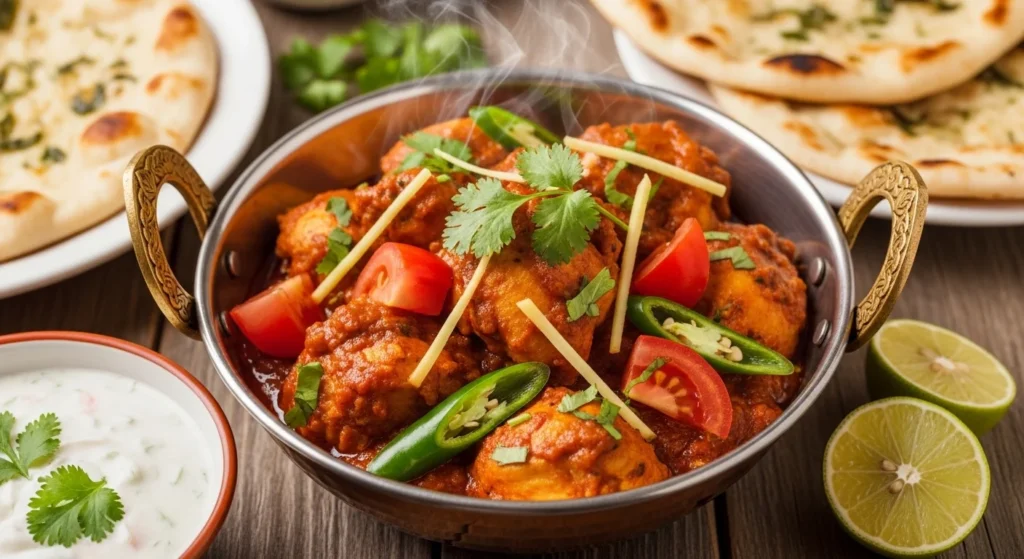
Chicken karahi is a favourite dish in Pakistan. It may have started off in the Khyber Pakhtunkhwa province, but soon became popular street food in Lahore, Karachi and Peshawar. The name of the dish comes from the “karahi” cooking wok.
What’s intriguing about this dish is its simplicity. Chicken karahi is not like other curries that use a plethora of spices. Tomatoes, ginger, garlic, green chilies and only a few whole spices are used. This creates a tomato-based sauce that is a great complement to the juicy chicken pieces, and goes perfectly with fresh naan bread.
Here’s How to Cook Karahi Step-by-Step
Cooking is more important than the quality of the ingredients. Here are a few tips to take your cooking up a notch.
First, opt for chicken with bones. Boneless chicken can become dry and doesn’t contribute to the gravy’s depth of flavour. Ideal pieces are those that are small to medium-sized so they cook through and are infused with flavour.
Second, use fresh tomatoes not canned. Fresh tomatoes provide the karahi with a tart-sweet flavour. Just chop them up – no need to puree. You’ll need some chunkiness in the end product.
Third, cook on high heat. Karahi is always cooked on high heat. It gives the chicken a little bit of char and helps the tomatoes to release the juices quickly and not make the gravy runny. Make sure to keep turning to avoid it sticking.
Types of Chicken Karahi – A Quick Overview
Not all karahis are the same. Different regions and families have their own twist on the classic recipe. Here’s a simple comparison to help you understand the most common variations.
| Feature | Type / Option | Description |
|---|---|---|
| Cooking Style | Dry Karahi | Less gravy, more concentrated flavors, charred edges |
| Cooking Style | Gravy Karahi | Tomato-based saucy version, great with naan or rice |
| Spice Level | Peshawari Karahi | Milder, uses more yogurt and less tomato |
| Spice Level | Lahori Karahi | Spicier, tomato-heavy, bold green chili flavor |
| Protein Choice | Chicken vs. Mutton | Chicken cooks faster; mutton has deeper, richer taste |
Each version has its own charm. For this guide, we’re focusing on the Lahori-style spicy chicken karahi because it’s the most widely loved and easiest to make at home.
Advantages of Home-cooked Chicken Karahi
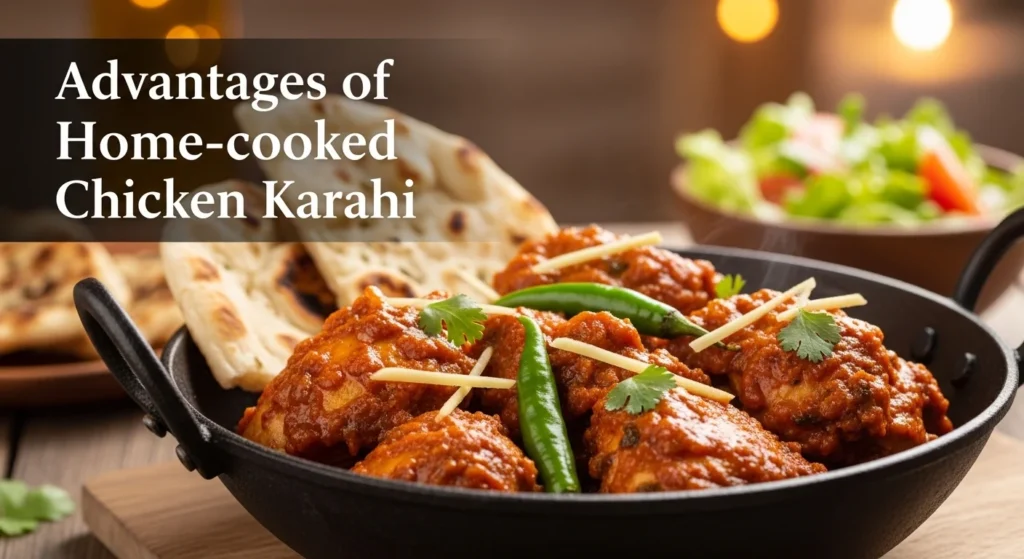
There are a lot of benefits in making chicken karahi at home. Let’s discuss some of them.
You control the ingredients. The ones you find at restaurants are often fried in too much oil, or laced with artificial colours and flavourings, or made with poor-quality chicken. You can choose fresh vegetables and just the amount of oil you need to use. That’s good for your health.
It saves money. It’s expensive to go out for karahi for four people. That’s a lot less if you make it yourself, and you’ll likely have enough for another day.
And it’s quicker than take-out. Seriously. The time it takes to order and wait for your delivery, you can have your own fresh home-cooked karahi on the table. After a couple of times, you’ll be an expert.
Don’t Make These Mistakes With Karahi
This recipe can be tricky at times. Here are some to avoid.
Using too many spices. It’s the most frequent mistake. Karahi isn’t spicy. All you need is salt, red chili powder, coriander powder and cumin. This is all you need. Garam masala and turmeric will alter the taste.
Low heat cooking. Karahi demands high heat. A low heat will make chickens release moisture, making it stew, not karahi. High heat, particularly at first.
Overcrowding the pan. This will cause the chicken to steam rather than cook. If necessary, cook in batches, or use a bigger karahi.
Pro Tips from Pakistani Home Cooks
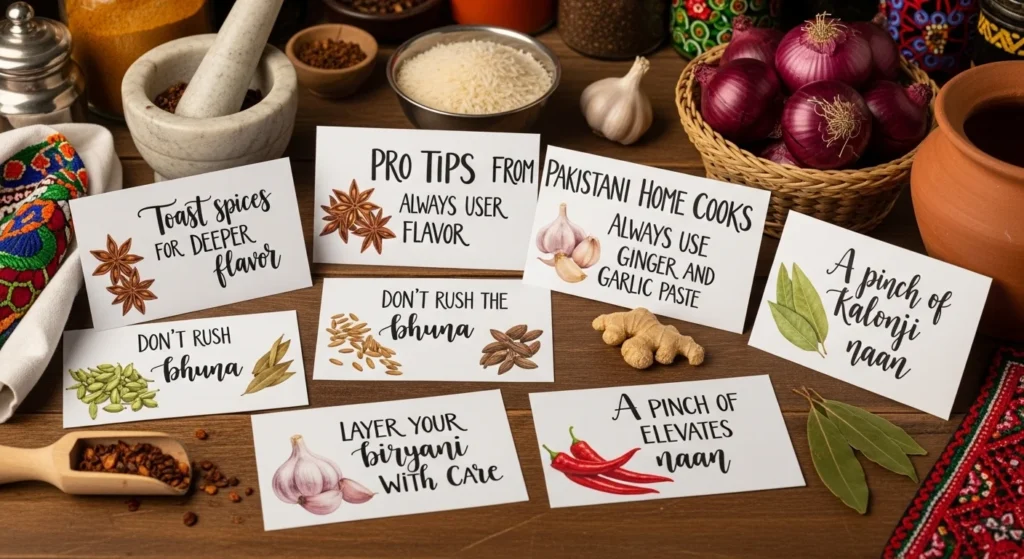
Use desi ghee (ghee) instead of oil. Using just a tablespoon or two of ghee (mixed with oil) adds to the desi flavour. You’ll be able to smell the difference.
Don’t forget to crack your whole spices. The cumin seeds and coriander seeds will give off more aroma if they’re slightly crushed. You can do this with the back of a knife or a mortar & pestle.
Wait to add the chicken until the tomatoes are cooked down. If you add it too soon the chicken will taste of tomato and won’t make gravy. You’ll know when the oil has separated from the tomato paste.
A street vendor in Lahore once explained to me that a small pinch of sugar would do the trick: add it to the tomatoes. This won’t make your dish sweet. It just neutralises the acidity and enhances the taste.
FAQs Spicy Chicken Karahi Recipe
Q1: I don’t have a wok, can I still make this recipe?
You can use a skillet or Dutch oven. It’s important to use heavy and thick-bottomed cookware. It’s best to use a karahi, but not essential.
Q2: How hot is original chicken karahi?
It varies, depending on the number of green chilies and red chili powder you use. Use minimum and do as per taste. You can always make it spicy but you cannot make it less spicy.
Q3: Can I save any karahi?
Absolutely. Refrigerate in an airtight container for up to two days. Warm it on the stove, on medium heat. You may need to add a little water if it gets too thick.
Conclusion
Whilst the thought of cooking a spicy chicken karahi recipe from Pakistan at home may seem daunting, it is in fact simple. Using fresh tomatoes, quality chicken, and a few spices, it’s easy to prepare this gourmet karahi in less than 40 minutes. It’s important to use minimal ingredients, cook on high heat and top it with fresh ginger and green chilies. Once mastered, this dish will be on the menu each week. So, try it out this weekend – you’ll be rewarded with delicious taste and a happy family.
